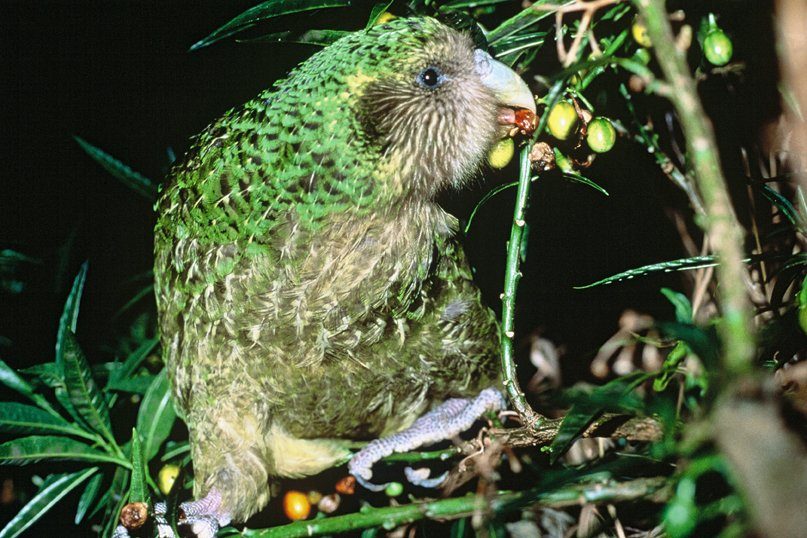
The kākāpō just had the best breeding season in its history
The kākāpō might be the most loveable bird on Earth: a plump, moss green parrot that cannot fly, smells faintly of honey, and freezes on the spot when startled. It is also one of the rarest, with just 235 adults left, every one of them known by name. Which is why this season's news from New Zealand feels so enormous. Across the remote island sanctuaries where the birds live, 78 females nested and more than one hundred chicks hatched, the biggest breeding season since the recovery programme began three decades ago. The old record, set in 2019, was 85.
The trigger was a feast: the rimu trees that kākāpō rely on produced a bumper crop of berries, and the birds answered with a baby boom. Rangers and vets have worked around the clock through the summer, and this year they stepped back a little too, trusting more eggs to hatch in nests rather than incubators. The reward for thirty years of patience is now waddling through the ferns. Kākāpō chicks are counted as adults at 150 days old, which means right about now the first of this record generation officially comes of age. Happy birthday, little ones.
The world's rarest wombat has a new joey · Wildlife
London gets ready to welcome the storks home after 600 years · Wildlife
Good news travels when people pass it on. Get our stories free twice a week, send this one to someone who needs it. And if this story made your morning, you can buy us a coffee. It helps keep these good news stories travelling across the globe.
Subscribe free Send to a friend Shout us a coffee